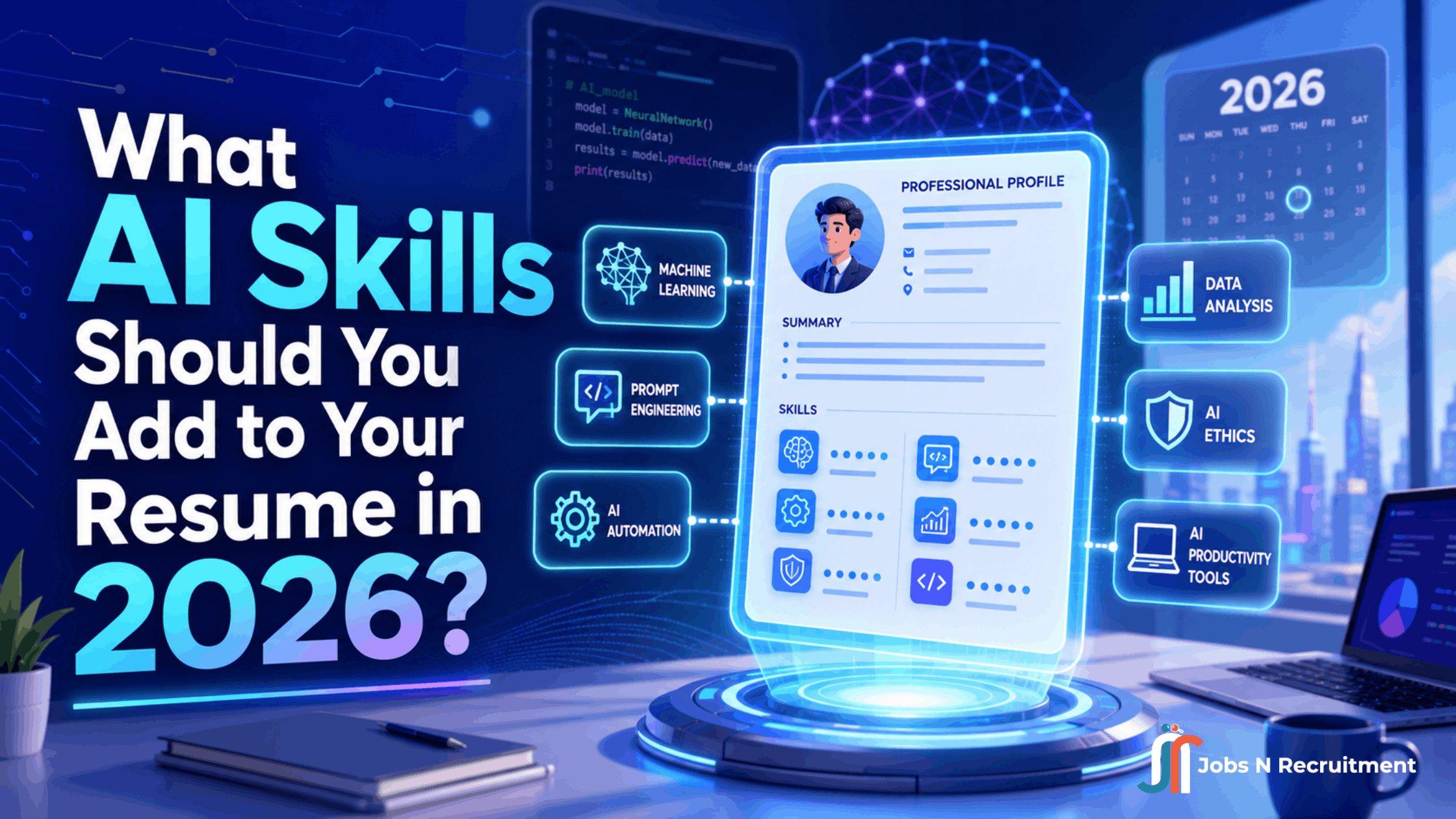
AI is now a core skill needed across the job markets of so many sectors. Employers are not just looking to appoint data scientists and software developers for AI-related roles in 2026. AI skills mentioned in the resume sections are important now more than ever because employers are seeking an individual who can utilise AI tools for their recruitment, marketing, sales, analysis, customer support, operations and writing. But just mentioning AI tools isn’t enough. Employers are looking to understand how you use AI tools to address problems, enhance accuracy, process information, save time, and contribute to business objectives.
The job market is shifting to skill hires. In addition to qualifications or job titles, recruiters are placing greater value on candidates’ project experience, practical skills, and clear results. According to LinkedIn research, the demand for AI skills and the number of positions related to AI kept rising because businesses are integrating AI into their daily processes. This suggests that individuals with a mixture of AI expertise and human abilities have better career prospects.
Why AI Skills Matter for Job Seekers in 2026
Professionals at all stages of their careers are seeing their expectations change as a result of AI. It is currently being used by businesses for customer service, recruitment, content, forecasting, reporting, automation and lead management.
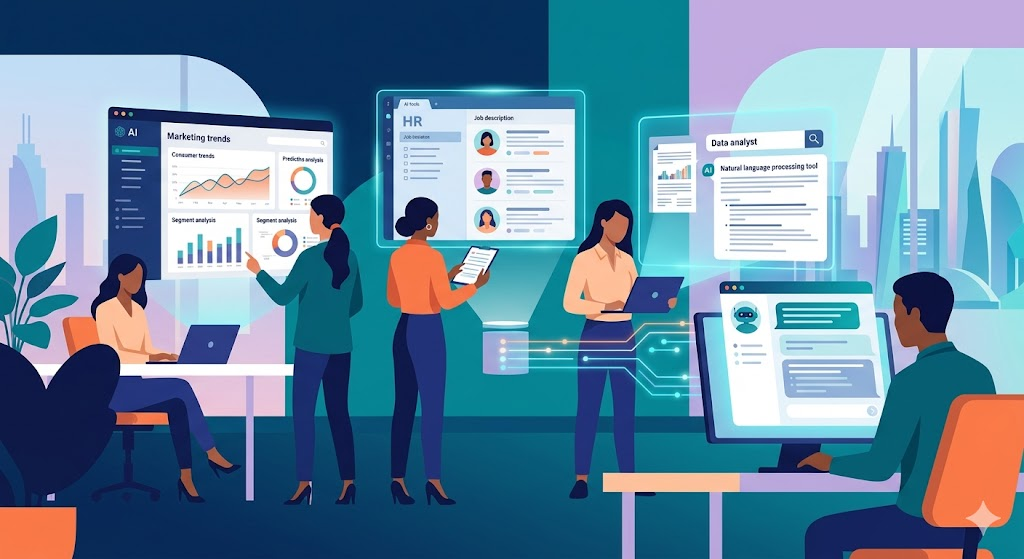
Relevant AI skills can become a signal for work readiness in modern jobs. Not every candidate needs to be a programmer of AI models, but having someone who can effectively and responsibly use AI is in demand. For instance, HR professionals can handle initial applications or organise job descriptions, and marketers can check customer trends.
Mention it in your resume, including examples of how AI assisted you in a task, project or business outcome.
Top AI Skills to Add to Your Resume
1. Generative AI and Prompt Writing
Its output can be used by professionals for summarising documents, brainstorming, report writing, creating drafts, and improving communication. The professionals can use generative AI tools to create drafts, summarise documents, brainstorm ideas, prepare reports, and improve communication. This skill is applicable in various fields such as content writing, marketing, HR, selling, customer care and administration.
Give the interviewers a description explaining how you used “Prompt Engineering” instead of just listing the words.
Resume example: Utilised generative AI tools to generate initial campaign briefs and social media posts, saving 25% of planning time.
This will allow recruiters to get a clear idea of your capability.
2. AI-Assisted Data Analysis
Technical teams are no longer the only ones accessing data for analysis purposes. AI tools can be used by professionals to summarise feedback, identify patterns, make charts, clean spreadsheets, and prepare business reports. Useful skills that could be included are:
- Data interpretation
- Spreadsheet analysis
- AI-assisted reporting
- Data visualisation
- Dashboard basics
- Customer feedback analysis
Resume example: AI-powered data analysis is used to segment customer feedback and pinpoint common customer service problems for the team in operations.
This skill is often employed in.
- Finance
- Marketing Operations
- Sale,
- Research
- Business Analysis.
3. Workflow Automation
Companies are seeking workers today who can function more efficiently and without repetitive motions. Automated tasks such as email sorting, meeting summarisation, routing customer enquiries, reporting, tracking tasks, and managing documents can be accomplished through AI-powered automation. If you have been using automation tools, describe the automation process you optimised.
Resume example: Developed an intelligent process that sorts customer requests with AI, saving the customer support team time on manual sorting.
This demonstrates how technology can be employed to enhance business processes.
4. AI Research and Fact-Checking
While AI can give quick responses, it can also give incorrect or outdated information. That is why, for AI research, fact-checking skills are important in 2026. Employers require professionals who can authenticate, verify, compare, and recognise unreliable outputs and make human judgements before disseminating AI-generated content.
Skills that can be added include:
- Research verification
- Source evaluation
- Fact-checking
- Content quality review
- Information synthesis
- AI output validation
It’s helpful to researchers, writers, recruiters, marketers, consultants and analysts.
5. Responsible AI Use
With the handling of internal documents, customer data, and confidential information, responsible AI use is becoming important. Employers appreciate candidates who are knowledgeable about privacy, security, copyright, and ethical AI practices. It’s important to be aware of when an AI tool can be used and when human review is required. Do not place confidential information of the company on public AI platforms without permission.
Resume example: Applied responsible AI principles when using AI tools to support research, reporting, and content creation.
This can help establish the trust of an employer, particularly when dealing with information relating to customers or sensitive data.
6. Human Skills That Support AI
Combining AI abilities with human attributes is more valuable. Employers are still seeking individuals who can communicate effectively, work collaboratively, make decisions and know customer needs. Key skills to accompany AI knowledge are: Important skills to include with AI knowledge are:
- Critical thinking
- Communication
- Problem-solving
- Creativity
- Adaptability
- Collaboration
- Decision-making
AI can be used to assist in work, but human judgement is still crucial. Employers would prefer to see candidates who are technically knowledgeable and have excellent interpersonal skills.

How to Add AI Skills to Your Resume
Include AI skills under your skills, work experience and projects sections. Maintain relevance to the position you are applying for.
For instance, instead of writing “AI expert”, you could write:
Designed an automated competitor research workflow with AI for less manual research time and better weekly reporting.
As a fresher, you can add AI projects that you have completed in your coursework, internships, certifications, freelance projects, or your own projects.
FAQs
What are the best AI skills to add to a resume in 2026?
The best AI skills include generative AI, prompt writing, AI-assisted data analysis, workflow automation, fact-checking, research verification, and responsible AI use.
Should I mention AI tools like ChatGPT on my resume?
Yes, if they are relevant to the role. However, explain how you used the tool to improve a task, project, or business process.
Do non-technical jobs require AI skills?
Many non-technical roles now benefit from AI skills. Marketing, HR, sales, customer support, operations, administration, and content roles increasingly use AI tools.
How can freshers show AI skills without experience?
Freshers can add AI-related projects, certifications, coursework, internships, freelance tasks, and portfolio case studies. Focus on the problem solved and the outcome achieved.
Conclusion
Incorporating AI skills into your resume in 2026 can enhance your application when supported by measurable outcomes in the workplace. Instead of just providing a list of AI tools, demonstrate how they were used to analyse data, validate information, enhance workflows, produce high-quality content, or assist in speeding up decision-making. You can take advantage of these skills, along with critical thinking, communication, and flexibility, to manage the demands of skill-based hiring.
For building a more robust profile and preparing for the future, continue exploring the latest job openings, career advice, and industry insights on Jobs N Recruitment. In order to make the best impression when applying for roles that align with your career objectives, it’s important to keep your resume up-to-date with real-world projects and measurable results, and the latest AI skills