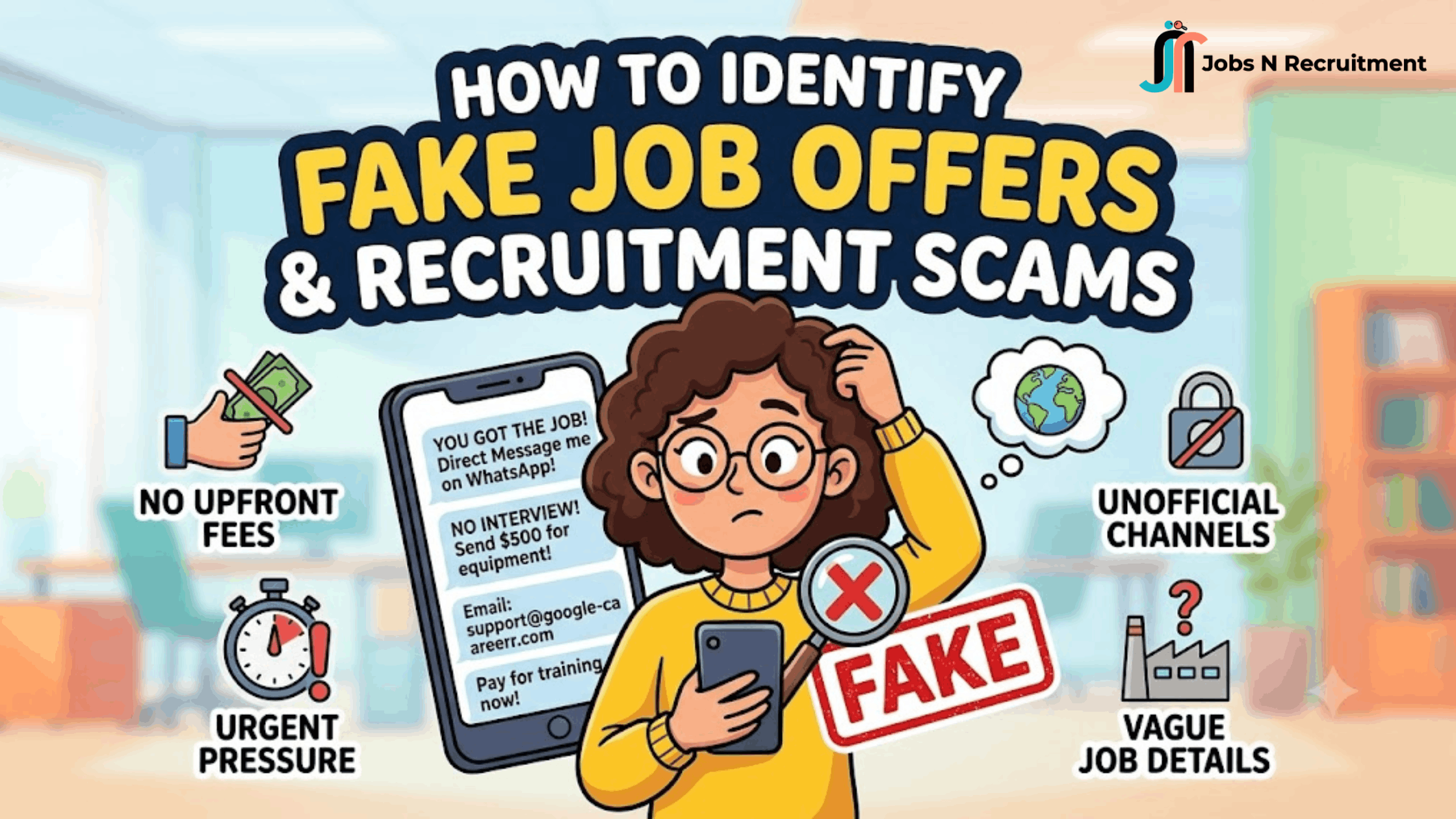
A few years ago, it was relatively easy to spot a fake job offer. The email used to be full of spelling mistakes. The company name sounded off, and the salary offer was laughably higher than the market rate. But today, this isn’t the case. Recruitment scammers have become slicker. They reach you with a company-labelled letterhead and polished job offers.
Thanks to AI, all this has become pretty easy, and almost anyone can whip up a professional email within seconds. Now, this makes it harder for applicants (who are already desperate for the next big opportunity) to distinguish between a recruitment fraud and a real job offer. The pattern has become increasingly common as modern hiring practices create more opportunities for scammers.
With remote jobs attracting global talent and online interviews becoming the norm, fraudsters have found new ways to target job seekers. In this guide, we’ll walk you through the most common job scam warning signs, the different types of recruitment scams circulating today, practical ways to verify a job offer, and the steps to take if you think you’ve been scammed.
What is a Fake Job Offer?
A fake job offer is a fraudulent employment opportunity designed to trick job seekers into sharing their personal or sensitive financial details. Unlike legitimate employers, scammers have no intention of hiring you. The main objective is to exploit individuals who are actively seeking better jobs. Scammers use bogus offers to get access to something valuable, such as:
- Money in the form of registration fee or fake visa charges
- Copies of identity documents that can be used for identity theft
- Banking or payment details for account access
In some cases, we’ve also seen online job scams that compromised device security and performance. Applicants are shared URLs or PDF files, such as online assessment or onboarding documents. Hidden inside are malware and viruses that can lock your phone, limit your access, steal your personal data, or track your activity. The best way to avoid getting scammed is to verify every opportunity, company details, and recruiter contact information before sharing documents or making any payments.

Why Recruitment Scams are Increasing
With hiring processes getting digitised, online job offer scams have become much more common. The Federal Trade Commission found that reports of job and employment scams have nearly tripled since 2020, highlighting the sharp increase in reported losses. There are several reasons behind this trend that we will be discussing below:
Growth of Online Hiring
Most job applications now begin online through job boards, company websites, and recruitment platforms. Candidates regularly submit their CVs, educational certificates, identification documents and other personal information online, making it easier for scammers to steal data, launch targeted job scams, and commit cybercrime.
Remote Work Setup
Remote job opportunities have practically removed boundaries. Today a business in London can easily employ someone from Pakistan or India. A startup in Singapore can interview candidates in Canada. While that’s fantastic for employers and job seekers, it’s made overseas fake jobs more convincing and lucrative. Since candidates will never be visiting the physical office during the recruitment process, scammers can easily impersonate company representatives.
Social Media Job Portals
LinkedIn is one of the biggest social media networks where you can connect with professionals worldwide and any big or small company. But this has also made unsolicited messages normal. While the platforms do have their own set of security checks and messaging limits, fraudsters can still take advantage of the platform using multiple fake IDs and spammy data extraction tools.
AI-Generated Emails and Websites
Artificial intelligence has made recruitment fraud more sophisticated. Messages that once looked suspicious because of poor grammar can now read like they were written by an HR professional. Scammers can now create exquisite websites, realistic job descriptions, and recruiters’ profiles in minutes. The AI-generated results are so accurate that it has become harder to detect fake job scams.
Growing Competition & Restricted Job Market
As more professionals and fresh graduates enter the market, the competition in the job market has increased. As a result, candidates are making faster decisions during their job search. They often apply to multiple roles with minimal research and place their trust in recruiters more readily. Attractive job opportunities and competitive salary packages are hard to ignore, especially when most of the candidates are looking for better career prospects and higher-paying roles. This has given scammers a larger pool to target and benefit from.
10 Common Job Scam Warning Signs
Most fake job offers don’t reveal themselves through one obvious mistake. Instead, they raise a series of small red flags that become difficult to ignore when they appear together. Knowing these warning signs can help you spot recruitment scams before they cost you money or personal information.
1. They Ask You to Pay Money
Look at it this way. Why would a legitimate employer ask you for payment before you even start the job? Most likely not. But online, the same request is often made as a processing fee, training charge, visa cost, security deposit, or equipment expense.
2. Salary Sounds Too Good to Be True
Big pay cheques are bound to get noticed. That’s why scammers often advertise attractive pay offers for jobs that require little to no experience, no qualification, or little work to do. The opportunities are great, but they are few and far between. If the salary is way above what other similar positions pay, check out other vacancies in the same industry before you get too excited.
3. No Proper Interview
A recruiter you’ve never spoken to congratulates you on getting the job just minutes after receiving your CV. Ask yourself one question: How did they decide you were the right candidate? Typically, employers want to know who they’re hiring. That involves interviews, assessments, or a substantive conversation at minimum. You should just stop and skip those steps all together.
4. Recruiter Uses Personal Email
Most companies hire with their official business email address. It helps to build authority and responsibility. If you receive an email from someone claiming to represent a well-known organisation from a Gmail, Yahoo, or Outlook account, don’t dismiss it as a small detail. You should check the company’s website and the contact information before you reply.
5. Urgent Pressure to Accept
“Accept today or lose the opportunity.” Scammers create a sense of urgency so that you don’t spend time on verification. Take your time before you accept an offer. A genuine employer won’t object if you need time to read the contract or ask a few questions.
6. Job Description is Extremely Vague
Some vacancies sound impressive without actually saying anything. If you finish reading the advert and still can’t explain what the role involves, who you’ll report to, or what skills are required, there’s a problem. Genuine job descriptions provide clarity. Recruitment fraud offers often rely on broad promises like “unlimited earning potential” or “exciting online opportunity” instead of meaningful details.
7. Company Website Looks Suspicious
These days, scammers don’t always settle for a fake email. They build entire websites. At first glance, everything may look professional. Look a little closer. Broken pages, missing contact details, copied content, or an unusual web address can reveal what the homepage tries to hide. A simple habit helps: search for the company’s website yourself instead of clicking the recruiter’s link.
8. Fake LinkedIn Profiles
A polished LinkedIn profile isn’t proof that someone is a legitimate recruiter. Some scammers copy real employees, while others create convincing profiles from scratch. Before trusting the account, check its activity, employment history, mutual connections, and interactions with other employees at the company.
9. Requests for Personal Information Too Early
Your employer will definitely ask for your personal identification documentation, but it should never happen in the first conversation. If a recruiter asks for a passport copy, national ID card, or bank information even before the offer is made, ask why. It is because sensitive information should only be requested and catered to during a verified onboarding process.
10. Poor Grammar and Formatting
Everyone makes typo errors, but what rings alarm bells are blurry logos, inconsistent fonts, unfamiliar business names or signatures that don’t match. Individually these may seem like minor mistakes, but if you piece them together, it looks more fake and suspicious.
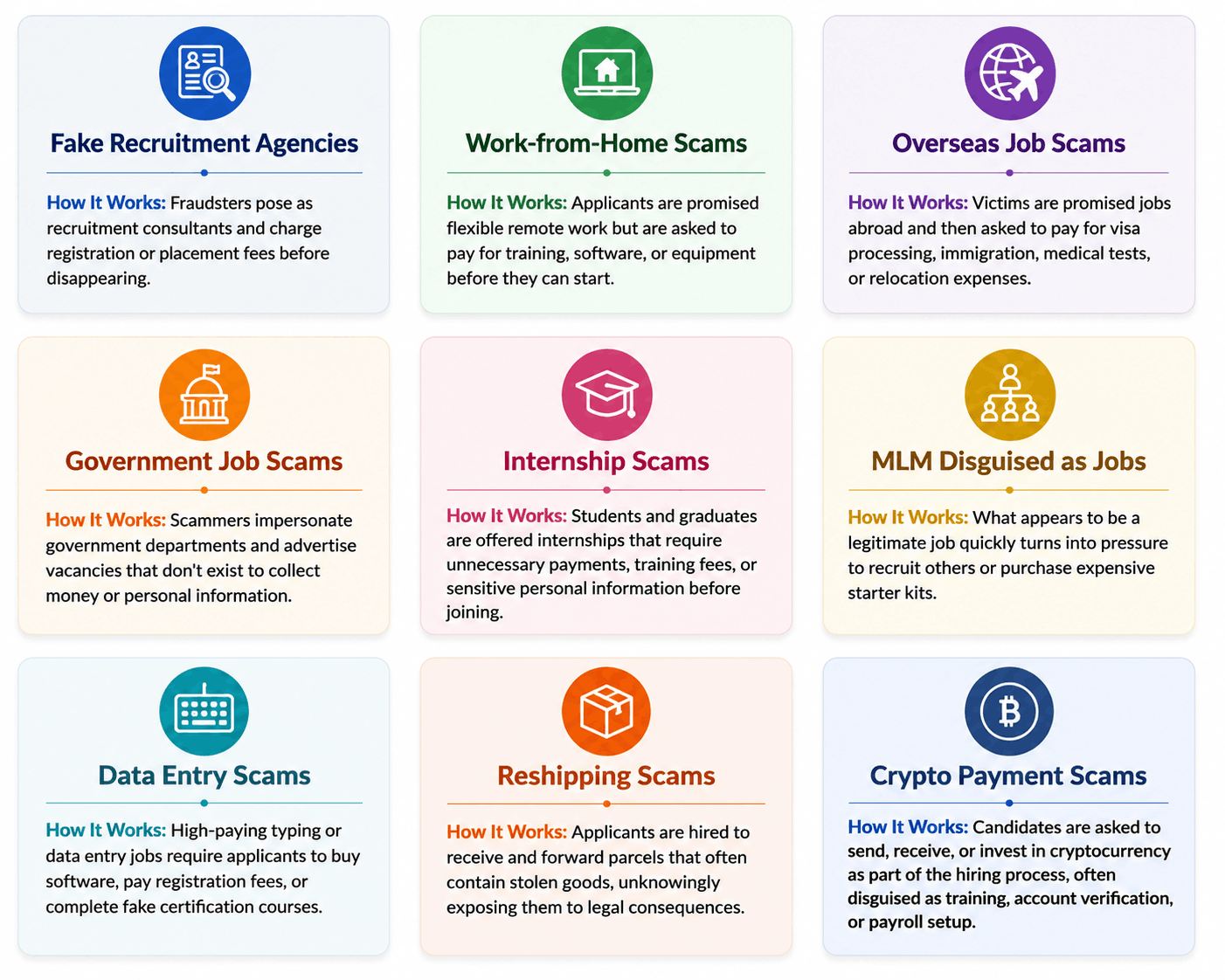
Types of Recruitment Scams
There are many types of job offer scams that appear genuine and convincing. For novice job-seekers and inexperienced applicants, distinguishing between fake and genuine offers can be difficult. To make it easier for you, we will highlight the most common job scam types and scammers’ patterns. This will help prevent you from making costly mistakes.
How to Verify Whether a Job Offer is Genuine
Before you accept any job offer, you should spend a few minutes verifying the company’s and recruiter’s details. A little research can help you avoid financial losses, identity theft, and other damages that could result from recruitment fraud. Use this checklist before you share any sensitive information or sign a document:
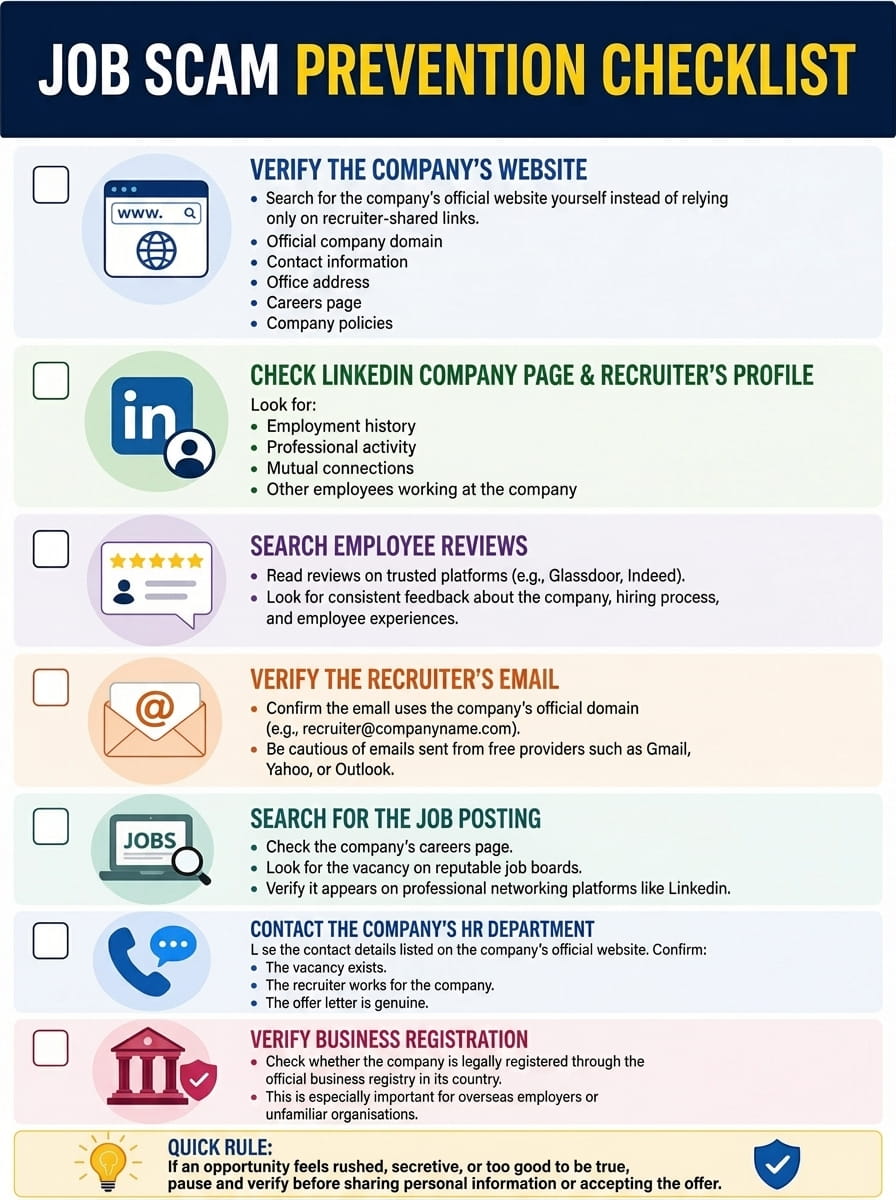
What You Should Never Share Before Verification
A job application typically requires your CV and contact information. The rest of the details can wait till the company has made an offer. Sharing confidential data pieces that are a simple no-no during the hiring process are as follows:
- Bank details
- Tax information
- Credit card number
- OTPs and login credentials
- Copy of documents (such as ID card and educational certificates)
If someone has just contacted you online and is asking for these details, stop and ask why they are necessary at this stage. Legitimate employers will only ask for these documents during the onboarding process once the job offer is accepted.
What to Do If You Receive a Fake Job Offer
Receiving a fake job is alarming, but your next step matters more. Acting quickly can help protect your personal information, finances, and peace of mind. Listed below are a few measures you can take as soon as you detect a recruitment scam.
- Stop Communication Immediately
- Never Transfer Money or Make Payments
- Flag Suspicious Emails
- Report The Job Portal
- Inform the Company
- Change Login Credentials
- Keep an Eye on Your Bank Account
- Report Identity Theft
Even if you’ve not lost money or faced any malicious activity, taking these precautions can protect you from any potential damages a fake job offer can cause.
Frequently Asked Questions (FAQ)
How do I know if a recruiter is genuine?
Check the recruiter’s LinkedIn profile, verify the email address, and make sure they work for the company they are reaching out to. You can even call the company or reach them via email Find the contact information on the official website to call the company or reach them via email.
Can companies ask for money before hiring?
No, never. Genuine employers do not ask candidates to pay registration fees, training charges, visa fees, or equipment deposits prior to employment.
Is a WhatsApp interview a scam?
Not always. Some recruiters use WhatsApp to schedule interviews or to contact candidates. But if the whole recruitment process is via messaging apps without phone or video interview, you should carefully check the opportunity.
What information should never be shared with recruiters?
You should never share banking information, credit card details, login credentials, tax information, and copies of your identity documents.
How can I verify a job offer?
If you want to verify a job offer before applying, you should first check the company’s official site, check the recruiter’s profile, and read company reviews on trusted platforms like Glassdoor. But that’s not all; check the email domain, contact the HR department and verify the business registration number (especially in overseas opportunities).
Are overseas job offers more likely to be scams?
Not really. Many legitimate employers recruit overseas to work with the best talent. However, be wary if you’re asked to pay relocation, visa, or processing fees before you’re hired.
What should I do if I already shared my personal information?
Cease all communication with the scammer, change your passwords, and keep an eye on your bank accounts if you’ve provided bank details. For further vigilance, you can even alert your bank to prospective fraudulent activity to prevent your account from misuse. Lastly, report to authorities if you’ve shared any personal data.
Final Thoughts
The good news is with careful verification, you can avoid being the victim of ongoing recruitment scams. Approach every opportunity with a healthy dose of curiosity, and don’t blindly trust the recruiter. It’s a small investment of a few minutes that could prevent you from hefty losses and ensure brighter future prospects. A genuine employer will always respect your caution.
Remember, if they dissuade you from verifying the information or job details, they are not worth your application. The right job offer will never disappear just because you intend to spend time on verification and making an informed decision.